Nasdaq 100 has worst day since 2020 as chips fall on weak earnings and data-center fears
A slide in AI and chip stocks that began in October spread to every S&P 500 sector, pushed the Nasdaq Composite into correction and hit Asian markets on Friday.
The short version
Written with AI, checked by an editor- The Nasdaq 100 fell 6.36% on November 5, its worst day since March 2020, while the chip index dropped 12.3% and every S&P 500 sector fell.
- Mixed Qualcomm and Arm results met fears that the new Democratic majorities and state governors will slow data-center building, the main source of chip demand.
- Friday's payrolls report and whether a federal moratorium can advance will show if this is a reset or the start of a longer slide.
The worst day for big tech stocks in more than six years
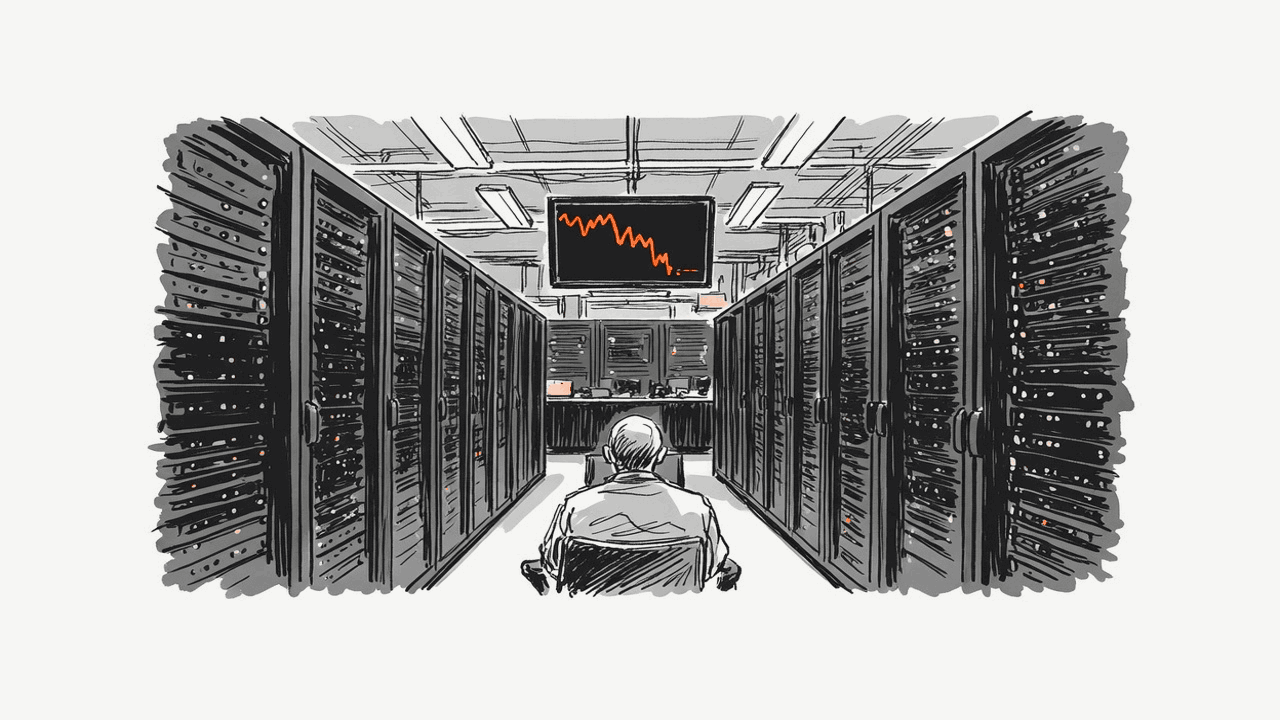
US stocks had their roughest session in years on Thursday, November 5. The Nasdaq 100 fell 6.36% to 26,630, its worst day since March 16, 2020, when Covid first hit markets. The broader Nasdaq Composite lost 5.52%, its worst day since April 2025, and closed more than 10% below its October 6 record. A fall of that size is what traders call a correction.
Chipmakers led the way down. The Philadelphia Semiconductor Index fell 12.3%, also its worst day since March 2020, and all 11 sectors of the S&P 500 ended lower. The S&P 500 dropped 4.36% and the Dow lost 1,833 points, both their worst days since April 2025. Nvidia fell 9.3%, wiping out its gains for the year, while Micron and AMD each lost 17% and SanDisk 22%.
NBC News reported that the selling was set off by mixed results from Qualcomm and Arm on Wednesday night. Qualcomm's quarterly revenue of $10.44 billion fell just short of forecasts, its profit per share edged past them, and its outlook was a touch below expectations. Qualcomm fell 9.5% and Arm 13%. At the same time, Democrats had just won both chambers of Congress, and Sen. Bernie Sanders posted "National data center moratorium now". Texas Governor-elect Gina Hinojosa has pledged to halt all data center approvals, in a state Wells Fargo estimates holds 27% of planned US capacity.
The selling itself is not new. The chip index lost 15.4% in October and Arm's US shares nearly 29%, and Thursday was the Composite's fifth drop of more than 500 points since mid-October. What changed is the scale and the spread. On Friday the Kospi fell 6.02%, tripping a circuit breaker, Japan's Nikkei 225 fell 5.9% into a bear market and TSMC closed 4.69% lower.
Why data-center politics hit chipmakers first
One likely reading is that investors are questioning how long the AI building boom can run. Chipmakers sell into data centers, so a slowdown in approvals could mean fewer future orders, and share prices built on years of growth can come down. Storage and memory names took some of the heaviest hits, with Western Digital down 17% and Seagate 16%. For anyone holding a tech or chip fund, that is where the losses sat.
The political threat looks real because voters signalled it. In the CNBC Voter Poll, 56% said AI and data centers were a crucial or major factor in their vote, and 65% of those backed a Democrat for Congress. In 41 local ballot measures across 10 states, voters backed restrictions in nearly every contest with results. New York and Texas had already paused some permits before the vote.
The pain reaches ordinary savers because the biggest index funds hold these companies. Nvidia fell 9.3%, erasing its gains for the year, and that drags on retirement accounts that never chose to bet on chips. Estimates of the value lost from the Nasdaq 100 alone run from $2.3 trillion to $2.5 trillion.
Bond prices rose. The 10-year Treasury yield fell 5 basis points (hundredths of a percentage point) to 4.84%, which nudges long-term borrowing costs lower; some money may have moved toward safer assets, though that is not confirmed. The VIX, a gauge of expected stock swings, briefly hit 28.09, its highest since March 31.
What the sell-off means for stocks and bonds
Chip stocks are likely to stay jumpy. Every statement from Washington or a state capital about data centers now changes expectations for future orders, and the iShares Semiconductor ETF lost 15% this week. Chip funds are likely to swing widely day to day while the policy picture is unclear.
The broad indexes face a split picture. Early Friday, Nasdaq 100 futures were up 1.2% while Dow futures were down 0.9%; one reading is that some buyers were returning to tech. If the rebound holds through the cash session, Thursday may mark the low for now; if it fades, the Nasdaq 100's close at its lowest since April 21 becomes the level to test.
Treasury yields could ease further if stocks stay weak and some investors seek safety, though one day's move is thin evidence. That would offer modest relief to borrowers, and a strong jobs report could reverse it.
After a 15.4% October fall and a 12.3% one-day drop, policy statements on data-center approvals can change expected chip orders, so headlines may keep moving prices sharply.
Wrong ifClear signs that federal and state curbs will not advance, paired with steady chipmaker guidance.
Futures rebounded on Friday, but heavy weighting in chip and AI names keeps the index exposed to further policy selling.
Wrong ifA decisive close below Thursday's 26,630 low would point clearly down; a sustained rally would point clearly up.
If stock-market stress persists, some money may move into government bonds, lifting prices and lowering yields; this rests on a single day's move, so confidence is low.
Wrong ifA strong October payrolls report that revives expectations of firm growth.
TSMC fell with US chip stocks on Friday, so further selling in the US chip sector would likely weigh on it again.
Wrong ifA rebound in US chip stocks or steady order commentary from US AI firms.
Why the policy threat may be overstated
A federal moratorium is a long way off. The Sanders and Ocasio-Cortez bill never got a committee vote and must be reintroduced when the new Congress meets in January. The White House backs a rival bill on ratepayer protection, and any curbs could face a veto from President Trump.
The earnings were not a disaster either: Qualcomm's adjusted profit of $2.17 a share beat the $2.16 forecast. And the Nasdaq Composite is still up more than 30% since Election Day 2024. One reading is that Thursday was less a verdict on AI than a costly reset of prices that had run ahead, given that the chip index had already lost 15.4% in October.
The jobs report and the incoming governors
The October payrolls report lands at 8:30 a.m. ET on Friday. Economists expect about 59,000 to 65,000 new jobs, after 29,000 in September. A weak number would add worry about the economy on top of worry about policy, giving sellers a second reason to cut risk. Beyond that, watch what the new governors of Texas, Ohio and Georgia actually do, and whether a moratorium bill returns in January.
- 2026-11-06US October nonfarm payrolls report, 8:30 a.m. ET: Expected at about 59,000 to 65,000 jobs; a weak print would add growth fears to policy fears.
- 2026-11-06Nasdaq 100 cash session after futures rebound: Shows whether Thursday's selling exhausted itself or resumes toward the 26,630 low.
- Policy moves by incoming governors in Texas, Ohio and Georgia: Texas holds an estimated 27% of planned US data-center capacity, so any halt to approvals hits chip demand directly.
- January 2027120th Congress convenes with Democratic majorities: A data-center moratorium bill would need reintroduction and faces a possible veto.
Researched and drafted with AI assistance from the sources below, checked against our editorial standards, and reviewed by a named editor. How we use AI → Found an error? Report it.
MacroInsight provides market commentary for information only. It is not investment advice or a recommendation to buy or sell any security.