Oil bounces only modestly after US strike on Iran's Qeshm Island, after a 7.6% fall
Brent regained only a small part of Monday's diplomacy-driven drop, as traders weigh a limited strike against talks that have not been called off.
The short version
Written with AI, checked by an editor- US officials confirmed limited, defensive strikes on Iran's Qeshm Island late on Monday, the latest in a series of undisclosed strikes in recent weeks.
- Brent rose 1.75% to $106.60 after Monday's 7.63% drop on diplomacy hopes, a small bounce that suggests traders see the strike as limited.
- After today's midterms, watch for Iranian retaliation, renewed Qatar-mediated talks, and Brent against $113.91, where the December contract stood on October 29.
A quiet campaign becomes public
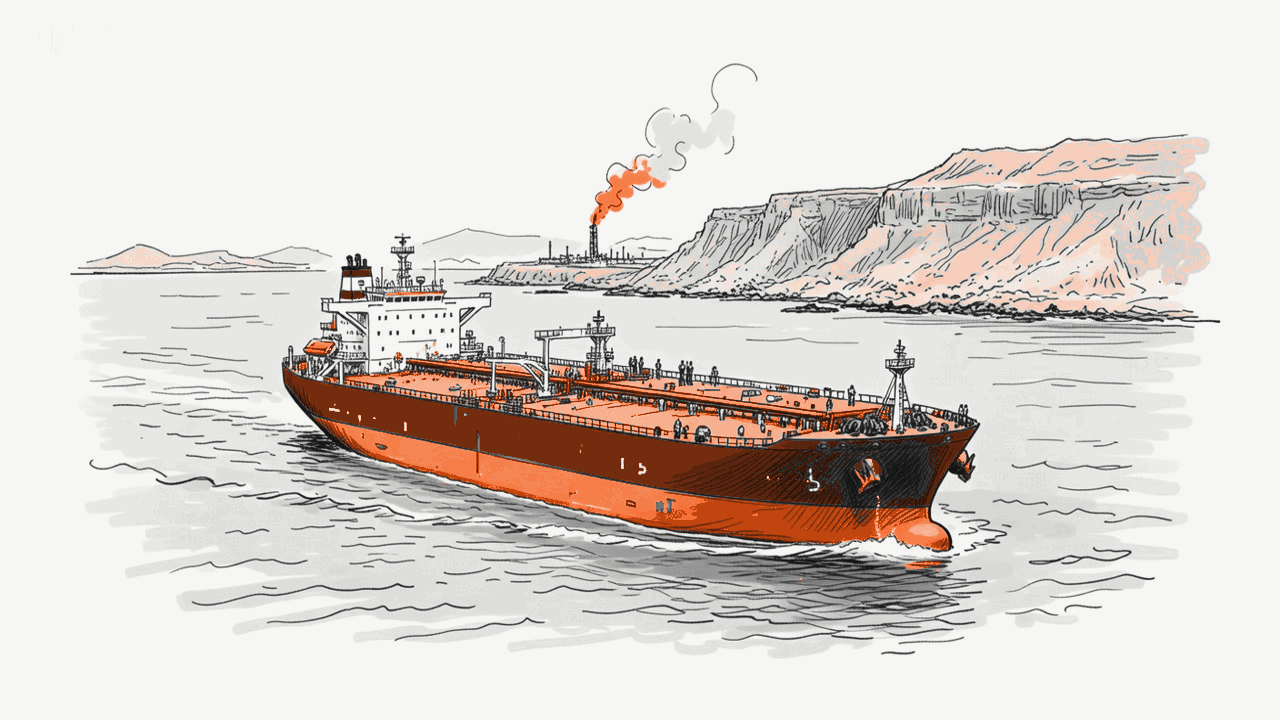
The US military struck Iran's Qeshm Island, in the Strait of Hormuz, late on Monday, November 2. US officials said the strikes were limited and defensive, meant to protect US forces in the region and a response to Iranians firing surface-to-air missiles at US assets.
Officials said this was not a return to major combat: Iran had again tried to hit a US aircraft, and the strike took out the launcher. The Hill reported that radar equipment and missile launchers were hit. Iranian state media reported five explosions on the island, and the US military has made no public statement.
The strike itself is not a new departure. The Wall Street Journal, which broke the story, reported it as the latest in a series of limited strikes carried out quietly in recent weeks, kept secret to avoid signalling a return to war. A US official said Iran's Revolutionary Guards have routinely fired at US aircraft over the strait, and the US has hit Qeshm before in this war, although the last publicly known attacks were in early September. What changed is that the campaign is now public, on the eve of the US midterm elections.
Oil rose, but not by much. Brent crude, the global benchmark, rose 1.75% to $106.60 a barrel on Tuesday. That regained only a sliver of Monday's 7.63% fall, the largest one-day drop since July 27. The US benchmark, WTI, moved in step.
Why traders shrugged off the strike
Oil is how this conflict reaches most people's wallets. The Strait of Hormuz carried about 20 million barrels of oil a day before the war, and global oil prices have risen about 45% since fighting began in late February. When buyers fear that supply will stay scarce, they bid up crude, and refiners pass those higher costs on at the pump.
The small bounce suggests traders see the strike as limited. Brent stayed close to Monday's settlement of $104.77 and well below last week's levels above $113. That fits the officials' account of a defensive hit within a pattern already under way, though part of the move may simply be a rebound after a sharp fall, and prices alone cannot show what traders were thinking.
A bigger force is pulling the other way: diplomacy. On Monday Vice President JD Vance said he and the president "feel really good about the prospect of potentially coming to a negotiated settlement." Tehran said contacts with Washington were continuing after talks with Qatari mediators, and its foreign ministry said the ball was in the US court. Those remarks came before the strike was public. Afterwards, Iran's chief negotiator Mohammad Bagher Ghalibaf warned Iran would not surrender to military action, but did not say talks had ended.
Step back and the swing makes sense. Brent rallied almost 14% in October to a six-month high on fears of renewed hostilities after the midterms. Monday's drop unwound much of that fear. But oil has sold off on settlement hopes before, only for fighting to flare again; a US-Iran memorandum signed on June 17 later collapsed.
What this means for oil, petrol and shares
Expect crude to keep swinging on headlines. The war-risk premium, the extra amount buyers pay in case fighting cuts supply, built up in October as traders priced in escalation after the midterms, and Monday's drop suggests it is likely draining. If talks hold, it can keep shrinking; if Iran retaliates or major strikes resume, it can return fast. Inventories add context: ADNOC's chief executive said nearly 1 billion barrels have been drawn from global stocks since the strait was disrupted, which likely leaves less cushion against a new shortfall.
Petrol prices generally move with crude, so a lasting shift in either direction would likely reach drivers in time. Energy company shares, whose revenue rises and falls with oil, carry the same two-way risk.
Prices are swinging between diplomacy hopes and escalation risk, and the strike's limited bounce shows each headline is quickly repriced.
Wrong ifA signed deal or a clear return to major combat would settle direction and reduce two-way swings.
WTI tracks the same war-risk premium as Brent, which drains if Qatar-mediated talks progress and rebuilds if Iran retaliates.
Wrong ifA signed deal or a collapse of talks would settle direction and end the two-way swings.
Petrol follows crude, so retail fuel costs inherit oil's headline-driven swings with a lag.
Wrong ifRefinery or seasonal demand factors overwhelming the crude signal.
Producer revenue moves with crude, so energy shares carry the same risk of either a deal-driven decline or an escalation-driven rise.
Wrong ifOil settling in a narrow range for weeks.
A post-midterm escalation that lifts oil would raise costs for consumers and companies, while a deal would ease them.
Wrong ifIran and the US keeping clashes limited and talks continuing after the election.
The case that the market is too relaxed
The calm could be misplaced. On Monday night Trump said the US "might have to go after" Pickaxe Mountain, a suspected underground nuclear site. He twice answered "No" when asked about striking after the midterms, yet a third aircraft carrier and thousands more troops are heading to the region. Supreme Leader Mojtaba Khamenei has warned a major attack would draw a response without geographical limits.
The risk also runs the other way. Iran says it could reopen the strait within two days if the US lifts its naval blockade, ends sanctions and stops attacks. Any real movement on that offer could push oil well below Monday's levels.
The vote, the talks and two price levels
Americans vote today. Trump had pledged not to attack Iran before the midterms, a promise that lapses after the ballot. Qatar-mediated talks have a draft proposal circulating but no date for the next meeting. A scheduled meeting or a US answer to Iran's Hormuz plan would likely push oil lower; Iranian retaliation for Qeshm or new major strikes would push it higher.
On prices, a return toward last week's levels above $113 would suggest war fears are back, though that reading compares with a different contract month; a break below Monday's low of $103.28 would suggest diplomacy is gaining ground.
- 2026-11-03US midterm elections; Trump's pledge not to attack Iran before the vote lapses afterwards: Removes a stated constraint on major strikes, the risk oil priced in during October.
- Next round of Qatar-mediated US-Iran talks: A draft proposal is circulating; a meeting could shrink the oil war premium, while a collapse could rebuild it.
- Iran's response to the Qeshm strike: Leaders have warned of responses without geographical limits; retaliation would test the market's calm.
- Brent relative to $113 and $103.28: A climb back toward last week's levels above $113 would suggest war fears returning; a break below Monday's $103.28 low would suggest diplomacy gaining.
Researched and drafted with AI assistance from the sources below, checked against our editorial standards, and reviewed by a named editor. How we use AI → Found an error? Report it.
MacroInsight provides market commentary for information only. It is not investment advice or a recommendation to buy or sell any security.